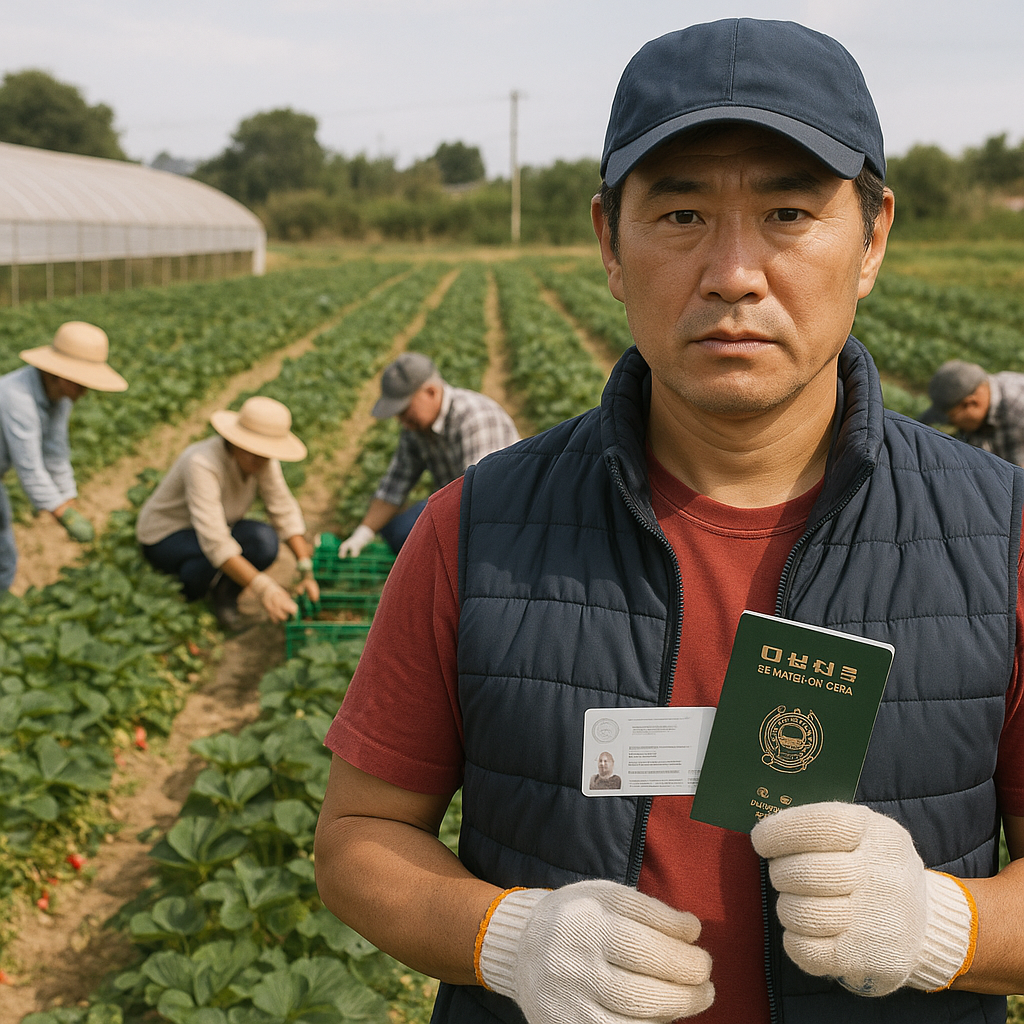
Worker situation
Korea seasonal worker visa quota 2026 affects when foreign workers can enter Korea for short-term agricultural or fishery jobs, but an announced allocation is not the same as an individual job offer. Local governments and approved employers connect workers to placements, while immigration authorities decide visa eligibility under the seasonal worker system.
The main status is E-8, which is designed for temporary seasonal employment rather than ordinary long-term work. This guide explains how the quota operates, which labor rules apply, how pay and hours should be checked, and what a worker can do when a contract or workplace problem occurs.
How the allocation works
The national quota is distributed through local governments and approved programs, so the number available in one county can differ from another. A worker should confirm the local recruitment notice, employer name, job location, work period, accommodation terms, and visa route before paying any fee.
Quota availability can change when a local authority does not complete recruitment or when a worker withdraws from a placement. Work24 listings may help a worker compare lawful employment information, while the local government or immigration office remains the proper place to verify a specific seasonal placement (Work24 Korea, 2026).
- Employer: The named employer should match the approved placement and employment contract.
- Workplace: The actual farm, fishing operation, or designated worksite should be identified before departure.
- Period: The authorized employment period should match the visa and contract rather than an informal promise.
- Recruitment fee: A worker should request a written breakdown of agency, transport, accommodation, and other charges.
Current labor rule
E-8 is divided into four commonly used subcategories, including agricultural and fishery seasonal work routes, and the correct subcategory depends on the approved activity. A C-4 short-term employment route can cover up to 90 days, while an E-8 seasonal stay can generally extend up to five months under the authorized program conditions.
These periods are legal ceilings or route characteristics, not an automatic right to remain after the visa or permission expires. A worker must follow the entry date, permitted employer, permitted workplace, and departure or change procedures stated by immigration authorities (Ministry of Employment and Labor, 2026).
| Item | What it means for a worker | What to verify |
|---|---|---|
| Quota | Number of seasonal placements made available through the program | Local allocation and recruitment notice |
| C-4 route | Short-term employment route generally limited to 90 days | Visa approval and exact end date |
| E-8 route | Seasonal work route generally allowing up to five months | E-8 subtype, employer, and permitted activity |
| Workplace change | Not freely available merely because another job pays more | Immigration and labor authority approval |
A seasonal worker should not assume that a tourist entry, another visa, or an undocumented job can be converted informally into a quota placement. Working outside the approved conditions can create wage disputes, immigration penalties, and difficulty obtaining future permission (Ministry of Employment and Labor, 2026).
Salary or hours data
The ordinary statutory working-time standard is 40 hours per week and eight hours per day, subject to legally recognized arrangements and exceptions. Overtime is not automatically free labor, and the applicable premium and calculation should be checked against the employment arrangement and the Labor Standards Act.
The 2026 national minimum wage is 10,320 won per hour, and an eligible worker should compare the written wage with the applicable minimum standard rather than relying only on a monthly figure (Ministry of Employment and Labor, 2026). A monthly salary can hide unpaid overtime, deductions, transport charges, or accommodation costs, so the worker should request the hourly basis and expected working days.
| Pay or time item | Practical check | Warning sign |
|---|---|---|
| Hourly wage | Compare the contract rate with 10,320 won per hour | Rate is stated only as an unexplained monthly total |
| Regular hours | Record start time, finish time, breaks, and workdays | Employer refuses to show a schedule |
| Overtime | Ask how additional hours and premiums are calculated | “All overtime is included” without a calculation |
| Deductions | Request receipts and written grounds for each deduction | Cash is withheld without an itemized record |
| Payment date | Keep bank records or signed wage receipts | Repeated delayed payment or partial cash payment |
Workers who are comparing seasonal employment with other Korean opportunities can review Salary information for broader pay context. Seasonal agricultural or fishery work should not be compared with Teaching or IT Jobs without accounting for visa conditions, accommodation, location, and working hours.
Rights and duties
A foreign worker generally has the right to receive agreed wages, a safe workplace, and information about working conditions in a language that the worker can understand. The worker should keep the contract, passport identification page, visa documents, wage records, attendance notes, and messages with the employer.
The worker must perform the approved job, obey lawful safety instructions, protect equipment, and report absence or injury promptly. The worker should not transfer to another farm, fishery, or labor broker solely on an oral promise because the permitted workplace can be linked to the immigration record.
- Before arrival: Confirm the employer, job, location, period, wage, accommodation, deductions, insurance, and transport arrangements in writing.
- At the workplace: Record daily hours and keep photographs or copies of schedules and payment statements where lawful and safe.
- For safety: Request protective equipment and an explanation of machinery, chemicals, heat exposure, and emergency procedures.
- For injury: Obtain medical help immediately and preserve treatment records, accident details, and witness contacts.
- For departure: Confirm the visa end date and lawful departure requirements instead of remaining after permission expires.
Accommodation supplied by an employer should be inspected for basic safety, occupancy, heating, sanitation, and the stated cost. Deductions for lodging or meals should be transparent and should not reduce lawful pay through an unexplained charge.
Problem resolution
A wage dispute is easier to prove when the worker can show the contract, attendance record, bank transfer, and a calculation of the unpaid amount. The worker should first request a written explanation from the employer and avoid signing a document that says all wages were paid unless the amount is correct.
For unpaid wages, excessive working hours, unsafe conditions, or retaliation, the worker can seek help from a local labor office or the Ministry of Employment and Labor. Work24 and official labor guidance can help identify employment information, but a labor office handles formal labor complaints rather than a private recruitment advertisement (Work24 Korea, 2026).
- Write down the date, location, employer, hours, amount owed, and people involved.
- Save the employment contract, messages, photographs, bank records, and wage statements in a separate location.
- Ask for payment or correction in writing and set out the amount or condition clearly.
- Contact a labor office, employment support center, interpreter, or authorized legal support service if the issue is not corrected.
- Contact immigration authorities before changing workplaces or leaving the approved placement.
A worker facing threats, confinement, passport retention, violence, or forced labor should prioritize immediate safety and contact emergency or public authorities. Leaving without advice can protect a person from immediate harm, but it can also affect visa status, so labor and immigration guidance should be obtained as soon as conditions permit.
Official source and checked date
This information was checked on August 22, 2026, against the English labor information published by the Ministry of Employment and Labor and employment information provided through Work24 Korea. Quota availability and individual visa decisions can change after publication, so the latest local recruitment notice and immigration decision control the specific case.
Readers seeking a lawful job search beyond seasonal placements can use Recruitment resources, but any offer should still be matched against the visa category and written contract. For official verification, use Work24 Korea and the Ministry of Employment and Labor, and keep records of the date and page used.
자주 묻는 질문 (FAQ)
What is the Korea seasonal worker visa quota 2026?
It is the number of seasonal placements allocated through the national program and local governments for approved agricultural or fishery work. The number available to an individual depends on the local notice, employer approval, and visa decision.
How long can an E-8 seasonal worker stay?
An E-8 seasonal stay can generally extend up to five months under the authorized conditions. The worker must follow the specific end date and workplace shown in the immigration permission.
Can a seasonal worker change employers?
A worker should not change employers or worksites informally because the placement can be tied to the approved employer. The worker should contact immigration and labor authorities before making a change.
What wage should a worker check in 2026?
The 2026 national minimum wage is 10,320 won per hour for covered employment. The worker should also check overtime, deductions, payment dates, and whether the contract accurately records working hours.
Where can a worker report unpaid wages?
The worker can contact a local labor office or the Ministry of Employment and Labor with the contract, attendance records, bank evidence, and messages. Immigration advice should also be obtained if the dispute involves leaving or changing the approved workplace.
Get in Touch
Have questions about your specific situation? Reach out anytime for a personal consultation.
Email: editor@jobkorea365.com